Discover the many uses for washing soda. This 100% biodegradable, inexpensive, and natural water softener is a powerful cleaning agent.
What is Washing Soda
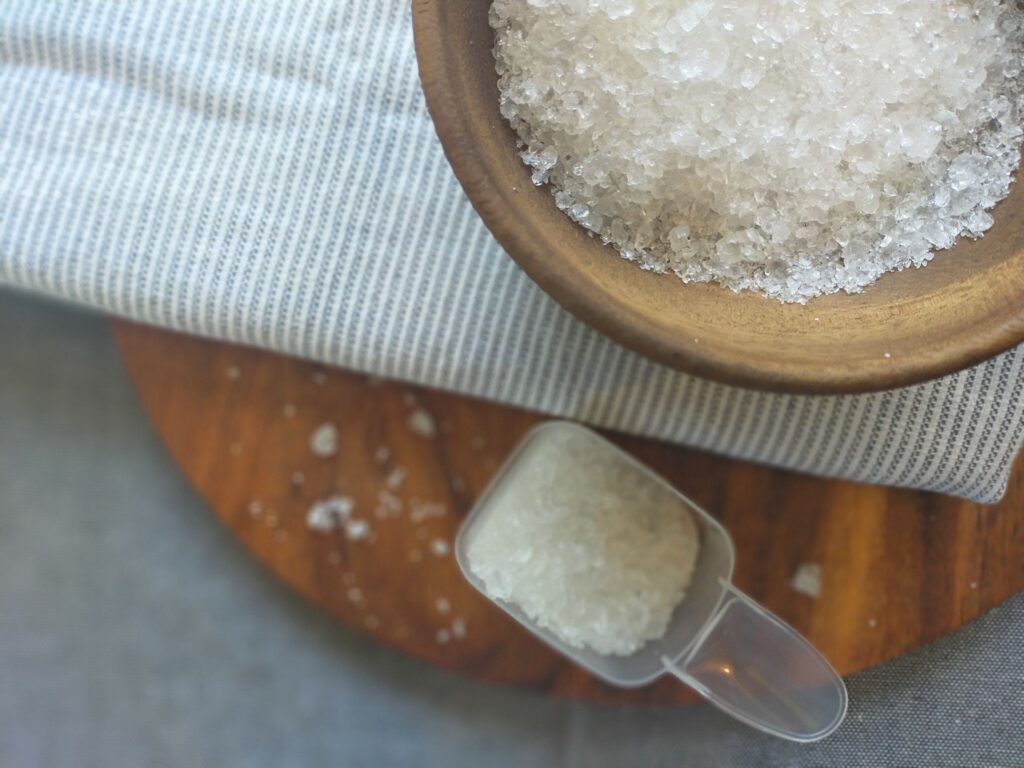
Washing soda (also known by it’s common names of soda ash or soda crystals) is a combination of Sodium Carbonate and Water. Sodium Carbonate shares a similar name to Sodium Bicarbonate (Baking Soda). They are similar in chemical makeup but very different in features and uses. If you are interested in learning more, you can read about the differences here.
Sodium carbonate is a white powder. It occurs naturally on Earth in mineral deposits but is also manufactured when sodium chloride (salt) and ammonia (a naturally occurring gas) are mixed. The most common industrial applications of sodium carbonate are; in the production of glass, and; as a key ingredient in commercial products such as laundry booster, washing powder and soaps.
Washing soda is sold as crystals or sometimes in powdered form. It is often found in the laundry aisle of grocery stores or is commonly sold in large quantities from cleaning supply stores. It’s important to note that when I refer to “washing soda” I’m referring to straight sodium carbonate crystals – not a product containing washing soda as a booster or additive.
The addition of water to sodium carbonate is what makes it form a crystal. It is highly soluble and dissolves in hot or cold water.
Is Washing Soda Safe
So far, it may sound like Washing Soda is just another “chemical”. The reality is: every solid, gas and liquid are either; a “chemical”, or a combination of “chemicals”. For example, water (H2O) is a chemical, and oxygen is a chemical element.
I can confirm that just because something is “Natural” that doesn’t mean it’s automatically “Safe”. However, in the case of washing soda, it is very safe to use around the home. With a high alkalinity ph level of 11, it is harmless when in contact with the skin. But would cause irritation in the eyes. It is also worthy to note it is not toxic if ingested in low concentration. This means it’s safe to use in the kitchen – but let’s not eat it, just in case!
Why I choose to use Washing Soda
Many of the cleaning products available today contain harmful toxins, overwhelming fragrances or dangerous chemicals. They are known to cause skin irritation, respiratory issues, allergies and environmental damage. For years my family struggled with itchy skin, sore eyes, sneezing, and occasional breathing problems. Over a period of a few years we have learnt about a more natural way of household and personal cleaning. We have replaced all the cleaning products in our home with more natural substances, washing soda being one of these ingredients.
The thing I like most about washing soda is it has so many uses! It is an all purpose cleaner. It has replaced all my store brought laundry products and I know I can use it safely without needing to take special handling requirements. There are no harmful fumes as it is fragrance free. And best of all – no more itching, sneezing or sore eyes due to our cleaning routines.
Another reason I love using washing soda is the money I save. This one ingredient can replace a vast selection of cleaning products. I no longer buy carpet cleaner, stain remover, fabric softener, silver cleaner, odor removers, dishwasher rinse-aid, toilet cleaner, the list goes on…. Which of course also means it saves a huge amount of space on my shelves and cupboards.
From the laundry room, to the kitchen. General freshening-up to heavy-duty cleaning tasks. Washing soda has proven to be a reliable but safe option for our family and home.
Now that you know what Washing Soda is, let’s jump into how to use it.
Ideas for the use of Washing Soda around the Home
Laundry Applications
- Acts as a natural fabric softener (safe on even the most delicate fabrics, including wool.)
- Lifts out tough stains, greasy soils, perspiration and other stubborn problems
- Naturally removes odors from clothing, bedding, towels and curtains
- Helps keep your washing machine clean – (add 1/4 cup of washing soda to an empty machine and run a normal wash cycle)
- Clears and cleans a clogged drain with regular use
- Safe for septic tanks in its diluted form
- Allergen free, homemade laundry detergent (no toxins or fragrance, plus the alkaline nature of washing soda helps eliminate skin irritation, reactions and rashes)
How to use washing soda in the laundry
Learn how to make a Laundry Powder Replacement and a Pre-wash Soak by following my simple recipes in the Homemade Natural Laundry Detergent and Non-Toxic Tips guide.

Kitchen Cleaning without Harsh Chemicals
- Removes burned-on stains or greasy build-up from plates, pots and pans
- Makes glassware sparkle
- Lifts burnt on food and tea stains
- Cleans silverware and stainless steel
- Cleans cooktops, range hoods, coffee pots, broiler pans
- Cleans and freshens the fridge
Most effective way to use washing soda in the kitchen
- Add a spoonful to the sink or dishwasher for sparkling clean dishes and glassware
- Add 1/4 cup of washing soda to the dishwasher and run an empty cycle to clean it and the drains
- Add 1-2 tablespoons to a gallon of warm water and clean the fridge or cooktop with a soft cloth, also works for streak free cleaning of stainless-steel appliances, sinks and garbage cans
- For cookware with baked or burnt on food, sprinkle the pan with washing soda then add enough water to cover the stubborn stains, mix to dissolve the crystals, leave to sit overnight, then wash as normal
Washing Soda Uses for Household or Heavy-Duty Cleaning Tasks
- Removes grease from floors and walls
- Helps lift smokey ceiling stains
- Helps remove stains, pet smells or odors from carpet or furniture
- Cleans concrete floors, paths and patio furniture
- Lifts oil, tar and road films from vehicles
- Removes soap scum from shower curtains or doors
- Cleans toilet bowls
How to use washing soda for household cleaning
- For general purpose cleaning: Add 1/2 cup of washing soda to a bucket of warm water to clean using either a damp sponge, mop or soft brush.
- For heavy-duty cleaning such as concrete floors and paths: Add 1 cup of washing soda to a bucket of hot water, a firm brush can be used for scrubbing.
- For carpet stains make a strong solution of washing soda and warm water, apply to stain, allow to sit but remove before it dries by pressing with a dry towel. (Note: colour test in a hidden place first.)

Personal Care and Other Washing Soda Uses
- Luxurious bath soak – add 1/2 cup of washing soda to your bath water and enjoy the silky softness
- Foot Soak – add 1-2 tablespoons of washing soda to a large basin of warm water – enjoy a book or a cup of coffee while your feet gently soak for 15-20 minutes
- Clean silver – line a non-metal container with aluminum foil, add 1-2 teaspoons of washing soda with hot water. submerge silver items so they are touching the foil. Leave to soak for 5 – 30 minutes depending on level of tarnish. Rinse and dry with a soft cloth
Disclaimers:
- As someone with extremely sensitive skin – I have never reacted to handling either washing soda crystals or a mixed washing soda solution. However, if you have any concerns about how your skin may react please use your own discretion and wear rubber gloves when handling washing soda.
- I recommend doing a color-fastness test (on a hidden area) before using washing soda on carpets, furniture, curtains or anything precious. I have never had a problem with color fade or bleeding but please do check first.